Showing posts with label Audi. Show all posts

Audi S5 Sportback


Audi S5 Sportback (2012)
The top models in the series - the S5 as Sportback, Coupe and Cabriolet - have also been refreshed. All S5 models, including the Coupé, are now equipped with the 3.0 TFSI producing 245 kW (333 hp). Compared to the 4.2-liter V8 it replaces in the Coupé, the supercharged V6 consumes on average 20 percent less fuel per 100 kilometers. Average fuel consumption is just 8.1 liters (29.04 US mpg) while performance remains impressive. The S5 Coupé accelerates from 0 to 100 km/h (62.14 mph) in just 4.9 seconds on its way to an electronically governed top speed of 250 km/h (155.34 mph).

Engines
The Audi A5 family sets new standards for sportiness and efficiency. All engines feature forced induction and direct injection for tremendous pulling power. Even the entry-level engine produces 320 Nm (236.02 lb-ft) of torque. The start-stop system and the recuperation system are standard with all engines - no other manufacturer takes such a rigorous approach. The lineup comprises three gasoline engines and four TDI units. CO2 emissions have been reduced by as much as 22 percent. The completely redesigned 1.8 TFSI showcases the full extent of Audi's expertise. Groundbreaking innovations can be found in the control of the valves and their lift, the thermal management concept, the injection system, the turbocharger and the integration of the exhaust manifold. In the Audi A5 Coupé, the high-end four-cylinder unit consumes on average just 5.7 liters of fuel per 100 km (41.27 US mpg). This best-in-class value corresponds to 134 grams CO2 per km (215.65 g/mile) and is 21 percent lower than before. With 125 kW (170 hp), the 1.8 TFSI accelerates the A5 powerfully. The output of the 2.0 TFSI remains unchanged at 155 kW (211 hp). New to the Audi A5 lineup is the 3.0 TFSI, a supercharged V6 producing 200 kW (272 hp). The diesel engines are also impressively efficient, and the four-cylinder units feature modifications in numerous areas. Equipped with the 130 kW (177 hp) 2.0 TDI and a manual transmission, the Audi A5 Coupé consumes on average just 4.7 liters of fuel per 100 km (50.05 US mpg) - a CO2 equivalent of 122 g per km (196.34 g/mile) and a milestone in the coupe segment.

Three V6 diesel units round out the lineup on the top end. The 3.0 TDI with 150 kW (204 hp) is the most fuel-efficient six-cylinder unit in its class worldwide. In the Audi A5 Coupé with multitronic, it consumes on average 4.9 liters (48 US mpg) of fuel and emits just 129 grams CO2 per km (207.61 g/mile). The second variant of the 3.0 TDI produces 180 kW (245 hp). Arriving somewhat later is a particularly low-emissions clean diesel model that will make the Audi A5 the first coupe on the market to meet the Euro 6 diesel standard. source : netcarshow.com

Audi A4 Allroad Review 2013


if you are still confused to find a car, do kuati was present and a new look are the Audi A4 Allroad Quattro, which had just been introduced into more affordable than Australia.Allroad A4 A6 Allroad, which has sold over 10 tahun.Audi said an edition A4 Allroad limited and only 150 will be coming to Australia.A4 Allroad is a wagon version of the Audi A4 is fitted with some extra equipment and body reinforcements and finished off with a diesel engine and all-wheel drive.It all tente not cheap. There is one model costs $ 69,990, which represents a premium of $ 7,000 compared to the Audi Q5 SUV.


And while this new Allroad has more ground clearance than Avant, and is equipped with front and rear skid plates, it is better suited to handle gravel roads or dropping the kids off in the grass near the football field rather than for any serious off-road excursions. However, with its fulltime all-wheel drive, we can easily appreciate the security that will give you when dealing with steep mountain roads with tight corners and switchbacks, (and no fences in many places) while the winter snow. With a ground clearance of 180mm, which is less than the Q5 but 37mm 20mm more than the A4 Avant, the A4 Allroad provides enough space above ground for light off-road work like the odd trip or a trip to the snow.


Allroad has a slightly different footprint A4, with a 23mm-19mm front track wider and wider rear track, which no doubt contributed to the positive handling characteristics.A4 Allroad put up with some off-road duty, and no party stainless steel front plate, but no other changes.machineMachines are only available for the A4 Allroad is a 2.0-liter four-cylinder turbo diesel engine, which produces 130kW and 380Nm. It is connected with the transmission of dual-clutch seven-speed automatic and no manual option.


Allroad comes in three trim levels: Premium, Premium Plus and Prestige. All use the same intercooled, direct-injection 2.0-liter 4-cylinder turbocharged. This engine makes 211 horsepower and 258 lb-ft of torque. Gas mileage listed at 20-mpg city and 27 mpg highway-on premium fuel. Audi claims 6.6 seconds from zero to 60, but it did not feel like it on our test drive. And at times on our mountain driving, Allroad felt really sluggish when traveling uphill, even using the paddle shifters on the second and third gear to keep above 3000 rpm where the power starts.


We did not experience the same feeling with the A4 sedan, so we can only guess that nearly 400 pounds of weight added that the Allroad sedan that carries over to blame. We would love to see another 25 horses from the 2.0-liter engine. Because of that, we had no complaints when accelerating on level ground, or more slowly passing traffic. though the rise is higher than normal and the official fuel economy figure is 6.0 liters per 100 km, benefit from stop-start system that automatically kills the engine at idle.


8-speed manumatic transmission is very good. Sport Mode encourages a shift points up higher on the tach dial, and the Tiptronic mode provides the ability to hold each gear, and it is programmed to shift soon and crisp up and down. Smooth and sleek are two words that best describes the unit. Brakes feel strong, with good pedal feel, and there are no signs of fading when used hard on the mountain downhill runs.Allroad has the same independent suspension and electric power steering as a base A4. Responsive steering with just enough feedback. The suspension is tuned more for comfort than sporty. There are a lot of body lean when pushed hard through the twisties, but a lot of grip from the 19-inch tires and all-wheel drive system with stability control gives the driver the confidence to push the car hard.


InteriorThe interior is almost identical to the A4 Avant, Audi Like the others, looks smart and well designed, with alloy-look trim parts and shiny black dashboard elements. Black leather-faced seats (vinyl used for the sides and rear) as the standard black roof liner.There's adequate legroom and headroom for rear seat passengers and two adults can sit comfortably in the back. Technically, the A4 Allroad has five seats, but the middle seat in the second row is the company so absurdlyStandard gear includes keyless entry and start, eight airbags (including rear side airbags), xenon headlights, roof rails, satellite navigation and an electric cooler bag that fits neatly in the boot (connected to the 12v socket).


Audi A4 Allroad run permanent AWD system, not unlike the other A4 Quattros, but the car has electronic intelligent assistance systems that identify slippery surfaces and adjust the braking and electronic stability control intervene accordingly.


Allroad is one of the few vehicles 2013 Audi Connect telematics suite to use. For a monthly fee, Audi Connect customers can utilize the built-in 3G connection that turns into a wireless hotspot Allroad rolling up to 8 devices, and to allow local search Google via the MMI. Also available is a link to the satellite data for real-time traffic and weather info.


along with the CD / DVD controls, layout and design are well thought out and well executed. And in a nod to European sensibilities, there's even an ash tray and lighter. Everything seems to be where you want it, and where it should be. The entire interior is both stylish without looking fussy or overdone.


This includes the $ 1500 17-inch alloy wheels fitted to our test car, $ 2,760 19-inch rims, $ 1650 metallic paint, panoramic sunroof $ 2850, $ 1400 Bang & Olufsen sound system, aluminum trim $ 400, $ 850 wood grain trim Grains, automatic closing tailgate $ 1050 and $ 700 heated front seats.

Audi S7 2013

Looking at the Audi S7, we find it hard to believe hatchbacks ever went out of fashion. Few cars on the market have the presence of the A7 and its new high-performance derivative. While other manufacturers were busy building market-research-driven hatchbacks—vehicles like the BMW 5-series GT and Mercedes-Benz R-class—Audi simply tasked its designers with creating a beautiful five-door. The A7 doesn’t want for much, except perhaps more muscle than the 310 hp provided by its supercharged V-6.

Power to the Five-Door People

The S7 is powered by a 420-hp variation of the brand’s new twin-turbocharged 4.0-liter V-8. This engine, at the same output level, also motivates the new S6; it makes more power in the S8 and base Bentley Continental GT. There’s considerable commonality with the naturally aspirated 4.2-liter FSI V-8 still offered in other models, but the new engine features a number of enhancements, chief among them a pair of twin-scroll turbochargers and an indirect intercooler, all placed in the vee between the cylinder heads. The crankshaft design carries over from the 4.2 FSI, with reduced stroke; friction losses are significantly reduced. A cylinder-deactivation system—it closes the valves of cylinders 2, 3, 5, and 8 under light loads—helps fuel economy noticeably, especially when cruising in higher gears at constant speed. An engine stop-start system is standard.

2013-audi-s7.jpg

n the S7, the 4.0 TFSI engine is mated to a strengthened DL501 seven-speed wet dual-clutch transmission; the S8, with its 520-hp "4.0 TFSI-plus" engine, is coupled to an eight-speed torque-converter automatic. By default, 60 percent of the S7’s power is sent to the rear and 40 percent to the front. Depending on available traction, the front-to-rear split can vary between 20/80 and 70/30. A brake-based torque-vectoring function is standard; the optional sport differential, which provides true mechanical torque, can transfer almost all the torque to one of the rear wheels to enhance agility. And that's a good thing, given the S7's projected weight of about 4350 pounds. An electronically adjustable air suspension is standard; the steering is electromechanical. Dynamic steering with an adjustable ratio is optional, as is a carbon-ceramic braking system.

Make with the Quickness

The results are entirely to our liking. On the road, the S7 feels considerably lighter than it actually is. The car's limits are high, and its fluid responses make it easy to control. In the dynamic setting of the adjustable chassis, this car is harder and sharper than the S8. The dual-clutch transmission provides seamless, quick shifts, but when you push the car, the gearbox makes itself noticed. This is preferable to the S8 transmission’s behavior, as the larger car tends to gloss over its gearchanges. Only the S7's sheer size will keep most drivers from pushing it on narrow country roads like a sports car. We were pleasantly surprised by the electromechanical steering. Once again, Audi has done a better job than BMW in this area

The autobahn, of course, is a perfect setting for this Audi, and the only drawback—with admittedly little relevance for U.S. customers—is the fact that the S7 is governed at 155 mph. The car follows the road stoically at that speed, and Audi engineers promise the S7 could reach almost 190 mph if ungoverned. With help from the transmission’s launch-control function, we estimate the 0-to-60-mph sprint will take around four seconds, which is a considerable improvement from the A7’s 5.1-second time.

While cruising the autobahn or the freeway, you'll have a chance to appreciate the classy interior. We are especially impressed by the S-exclusive aluminum and Beaufort wood trim combo, created from tulip wood that’s dyed black and, well, aluminum. The interior is virtually perfect, unless you go for the optional head-up display. Its clumsy casing on top of the dashboard is a glaring eyesore, making the option appear to have been an afterthought.

AUDI RS Q3 2013

AUDI RS Q3

  • quattro GmbH chief van Meel: “The compact Audi RS Q3 creates a new class in the SUV segment.”
  • Combines excellent power with outstanding everyday practicality
  • 2.5 TFSI with 228 kW (310 hp) and 420 Nm (309.78 lb-ft), 0 to 100 km/h (62.14 mph) in 5.5 s
Audi is presenting the RS Q3 at the Geneva International Motor Show, the first RS model for the successful Q line-up. It combines outstanding everyday practicality with dynamic driving performance: It takes just 5.5 seconds to complete the sprint from 0 to 100 km/h (62.14 mph), and its top speed is electronically governed to 250 km/h (155.34 mph). The 2.5-liter five-cylinder turbo produces 228 kW (310 hp) and has an average fuel consumption of just 8.8 liters of fuel per 100 km (26.73 US mpg).
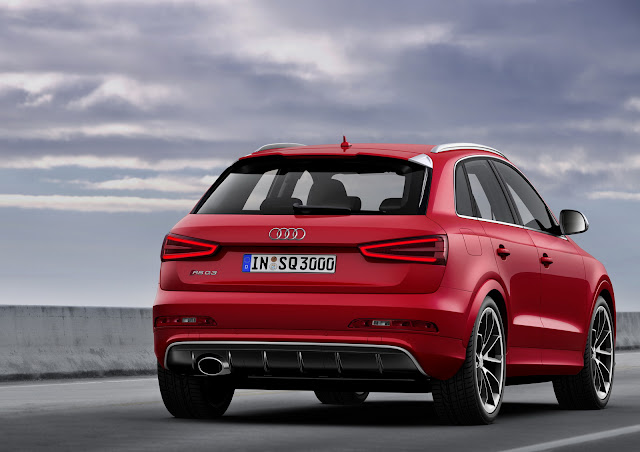


“The RS Q3 transfers the performance philosophy of Audi to the compact SUV segment, thereby creating a new performance class,” says Franciscus van Meel, Managing Director of quattro GmbH. “In addition to the RS 5 Cabriolet, RS 6 Avant and RS 7 Sportback, the RS Q3 is the fourth RS model that we are launching on the market in 2013. The RS family is growing to eight members – more than ever.” The RS Q3 combines typical RS properties such as high performance and driving pleasure with lifestyle qualities and high utility value. The Audi RS Q3 was developed by quattro GmbH which is a wholly-owned subsidiary of AUDI AG.

An award-winning high-performance engine, the 2.5 TFSI, is at work under the hood of the RS Q3. This five-cylinder engine has been named “International Engine of the Year” in its class for three consecutive years since 2010 by an international jury of automotive specialists. From 2,480 cc of engine displacement, the turbocharged direct-injection engine produces a maximum power of 228 kW (310 hp) at 5,200-6,700 rpm; its maximum torque of 420 Nm (309.78 lb-ft) is available between 1,500 and 5,200 rpm. These two values signify that the RS Q3 is unrivaled in its competitive field. This five-cylinder is a special engine, beginning with its fundamental concept. It is familiar from the TT RS and RS 3 Sportback, and quattro GmbH modified it for use in the RS Q3.

The 1-2-4-5-3 ignition sequence, supported by the geometry of the air induction and exhaust systems, generates a sporty engine sound that first made Audi popular back in the 1980s.

Drivers can influence the flap control for the exhaust system and the accelerator characteristic by choosing one of the modes auto, comfort and dynamic using the standard Audi drive select system. In the dynamic mode, engine response is sharper and the engine sound more intensive.

The 2.5 TFSI accelerates the Audi RS Q3 from a standstill to 100 km/h (62.14 mph) in just 5.5 seconds – the best performance value in this segment. The vehicle’s top speed is electronically limited to 250 km/h (155.34 mph). In the RS Q3, the Audi five-cylinder engine is working together with a standard start-stop-system for the first time. Other efficiency measures such as a regulated oil pump, which only pumps lubricant when needed, contribute to the car’s low average fuel consumption of 8.8 liters of fuel per 100 km (26.73 US mpg) which equates to 206 grams CO2 per km (331.52 g/mile).

A standard seven-speed S tronic transfers power to the drivetrain. It was designed in a compact three-shaft configuration, and its seventh gear has a long gear ratio to save on fuel. Drivers can choose between the D and S modes for automatic shifting of the dual clutch transmission, or they can shift manually – using the shift paddles on the steering wheel or the selector lever that sports a unique RS design. The Launch Control function controls acceleration from a standstill to attain optimal traction.

The heart of the quattro permanent all-wheel drive system is the hydraulically operated and electronically controlled multi-plate clutch located at the rear axle. It ensures proper distribution of torque between the front and rear axles.

The Audi RS Q3 impresses with dynamic and stable handling without sacrificing comfort. The RS sports suspension lowers the body of the compact high-performance SUV by 25 mm (0.98 in). The battery is located in the luggage compartment to achieve better weight distribution. The independent rear wheel suspensions are controlled by four links.

The electro-mechanical rack and pinion steering system operates very efficiently, conveying a stiff, precise steering feeling. An electro-mechanical parking brake and hill hold assist are also standard.

In the RS Q3, the internally ventilated and perforated brake discs at the front wheels have a wave design with wave-shaped outer contours, which saves approx. one kilogram (2.20 lb) of weight at the front wheels. The discs have a diameter of 365 mm (14.37 in), and they are gripped by eight-piston calipers painted black with RS logos. The electronic stabilization control (ESC) has a sport mode, and it can also be deactivated entirely.

The Audi RS Q3 comes on the German market with standard 19-inch alloy wheels. Three versions of 20-inch wheels are offered as well. One of these is the exclusive 5 dual-spoke V design, which is based on the Audi RS Q3 concept car that was shown at the 2012 Auto China motor show.

In addition to its engine, the Audi RS Q3 also demonstrates its special status within the Q3 line-up with a number of visual highlights. RS-specific design details emphasize the confident look of the compact, high-performance SUV. They consist of body accents and roof rails in matt aluminum, special door sill plates and door trim strips, a high-gloss black honeycomb front grille, RS front bumper and quattro emblem in the front air intake. A large roof spoiler, rear bumper with distinctive diffuser insert, large elliptical tailpipe and an RS Q3 logo accentuate the rear. At a length of 4,410 mm (14.47 ft), the dynamic top model is 25 mm (0.98 in) longer than the Audi Q3. It weighs in at 1,730 kg (3814.00 lb).

The Audi RS Q3 can also be customized by one of two optional styling packages – matt aluminum or black. Styling features include the flaps in the side air intakes, the trim on the diffuser and the fins on the roof spoiler. The Audi RS Q3 is available in eight exterior colors, including the exclusive Sepang Blue pearl effect.

The sporty lines of the exterior are continued in the interior styling. The instrument cluster has gray gauges with white scales and red pointers. Contrasting stitching in rock gray trim the three-spoke multifunction steering wheel with its flat bottom as well as the gear selector lever. The MMI and driver information system displays welcome the driver with the RS logo. Drivers can call up the boost pressure, oil temperature and a lap timer via the RS menu in the driver information system.

Along with the pedals, a foot support also shines in aluminum look, and the standard inlays are in piano finish black. quattro GmbH offers aluminum race or carbon as alternatives here. Black headlining is standard, and lunar silver headlining is optional.

Sport seats with embossed RS Q3 logos are also standard and are upholstered in black Alcantara/leather. Customers can also choose the optional Fine Nappa leather in black or lunar silver with contrasting stitching in rock gray or the design package with diamond stitching.

The cargo area has a base capacity of 356 liters (12.57 cubic ft), which can be increased to 1,261 liters (44.53 cubic ft) by folding down the split rear seat backs. A practical reversible loadliner is standard. Those wishing to transport even more cargo can order the towing bracket that is offered for the RS Q3.

Other standard features of the Audi RS Q3 include – in addition to the RS-specific driver information system – park assist plus, Audi sound system with ten loudspeakers, xenon plus headlights and LED tail lights. When they are not lit, the tail lights display a dark red tint.

In the infotainment area, a modular component system offers a wide range of options; at the top there is the hard-drive based navigation system, MMI Navigation plus. The surround sound system from Bose drives 14 loudspeakers with up to 465 watts of output power, while the Bluetooth car phone online together with WLAN hotspot connects the compact high-performance SUV with the Internet and brings the online services of Audi connect into the vehicle. Highly advanced driver assistance systems round out the options program.

In Germany, the base price is €54,600, and deliveries begin in fall 2013.

Images : AUDI RS Q3


[Source : AUDI]

WORLD PREMIERE ON RED SQUARE : AUDI A5 DTM IN MOSCOW

2013 AUDI A5 DTM

  •     Audi in the heart of the Russian capital before DTM debut
  •     Mattias Ekström and Edoardo Mortara thrill fans
  •     Deliveries in 2012 up by 44.1 percent: Russia an important market for the Four Rings
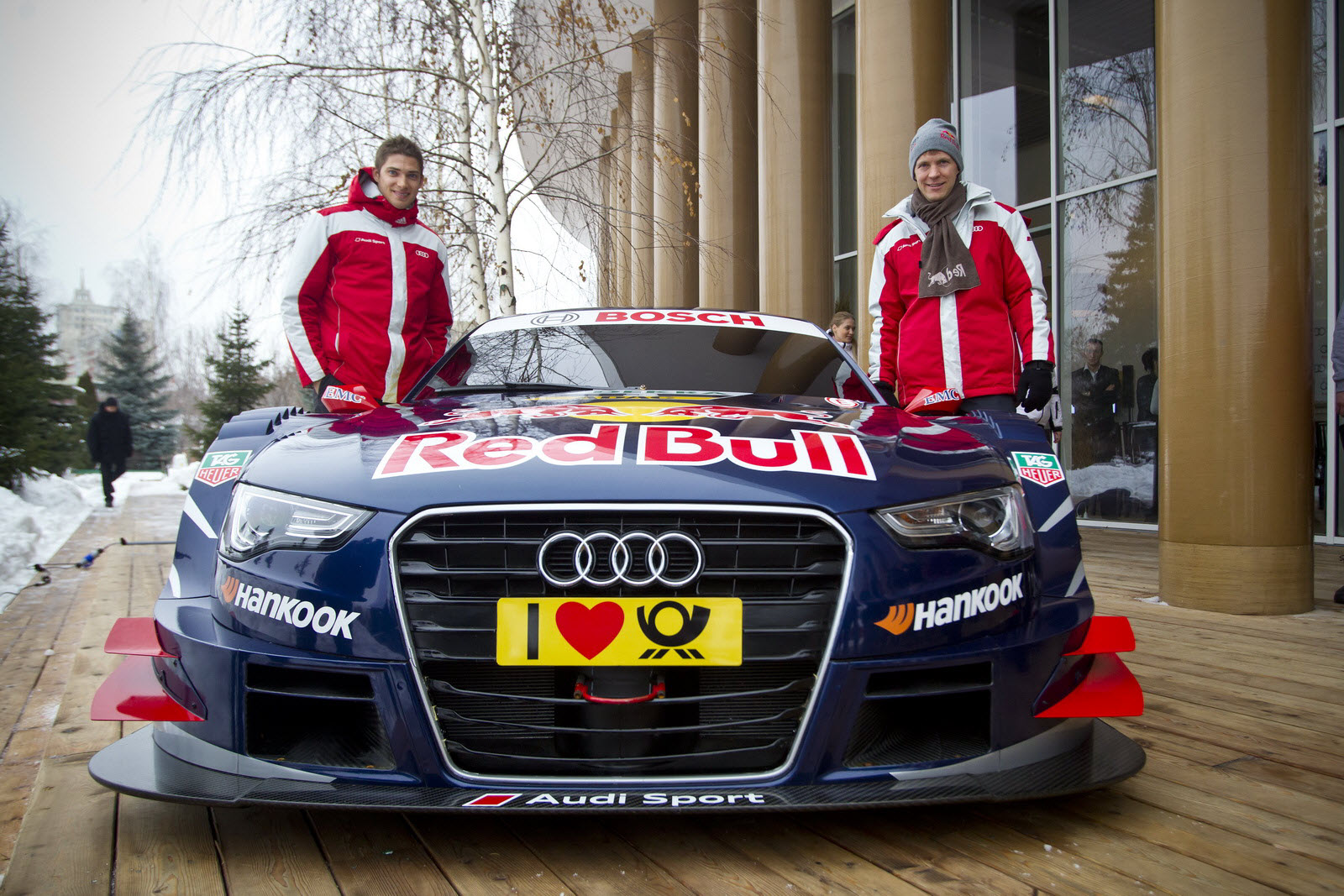
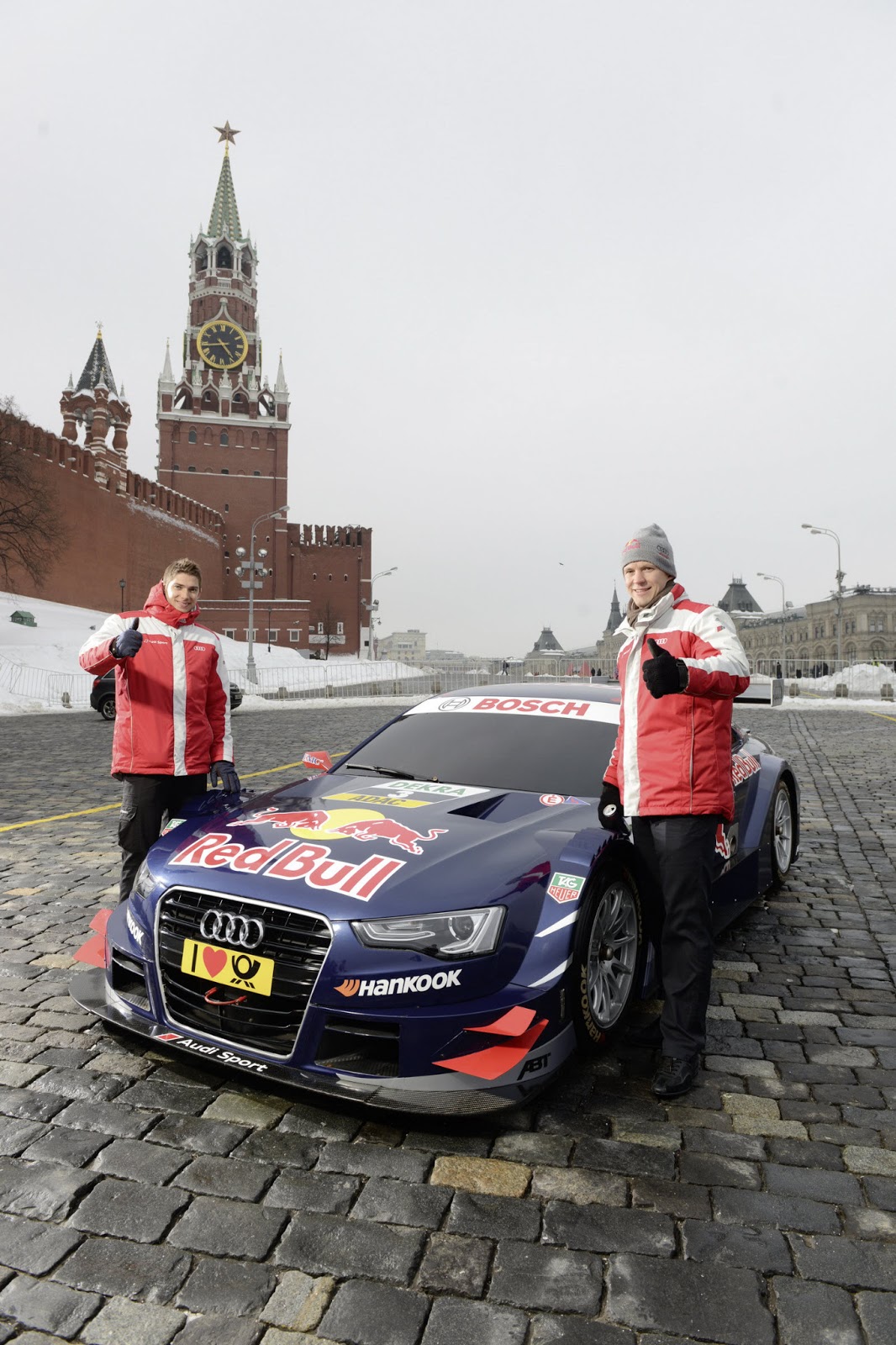
INGOLSTADT/MOSCOW : February 7, 2013 – On August 4, the DTM will be entering new territory to contest a race in Russia for the first time in its near 30-year history. Audi is the only brand to have visited Moscow half a year before the DTM round: Mattias Ekström and Edoardo Mortara today presented themselves together with an Audi A5 DTM to a large number of fans and journalists.

Mattias Ekström and Edoardo Mortara

The agreements have been signed, the date has been confirmed, the level of excitement before the event is rising. While the motorsport scene is feverishly looking forward to the DTM debut in Russia, Audi sent three of its stars to Red Square months before the first race: Mattias Ekström, Edoardo Mortara plus an Audi A5 DTM. Press conference at the Garage Center for Contemporary Culture, ceremonial unveiling of the 460-hp race car, photo shoot on Red Square, great enthusiasm and countless requests for autographs by the Russian fans – the first visit of the DTM stars in the heart of Moscow caused a major sensation.

“Complementing the calendar by a race in Moscow marks a decisive step for the DTM. It’s a great opportunity to present ourselves in an important market with an affinity for motorsport,” said Head of Audi Motorsport Dr. Wolfgang Ullrich. The numbers underscore the significance of the country for Audi: More than 33,500 automobiles delivered to Russian customers in 2012 correspond to an increase by 44.1 percent compared to the year before. Of Audi’s top ten sales markets, Russia was the one to record the fastest growth last year.

“The huge enthusiasm we were met with in Moscow is fantastic,” said Mattias Ekström, who had never been to Russia before. “I always enjoy getting to know new countries and people. Right after the first day here in Moscow I’m convinced that it has been a very good decision to hold a race here. I can hardly wait to return in August.”

Two-time race winner in the 2012 season, Edoardo Mortara, has high expectations as well: “I don’t know the Moscow Raceway yet but the layout looks interesting and promises a lot of action. I think the spectators can expect quite a bit on track and of course off track as well. I’m very excited about the DTM’s first visit to Russia.”

Elena Smirnova, Head of Audi Russia, shares the excitement of the two Audi stars. “Motorsport is the best forge of the brand’s technologies,” she said. “Now, when this kind of sport is on the rise in Russia, when professional race tracks are being built in different regions of the country, Audi is ready to show the new edges of its character. The fans of Audi here are looking forward to the beginning of the DTM series’ new season. They will be able to cheer for our drivers, personally attending the stage at Moscow Raceway for the first time. Russia is one of the top ten markets for Audi, so today, a few months before the championship gets to our country, we are pleased to introduce the Audi A5 DTM to our fans.”

Images : World premiere on Red Square: Audi A5 DTM in Moscow
 

[Source : AUDI]